
Health resources
Bronchitis Treatment for Adults: What Helps
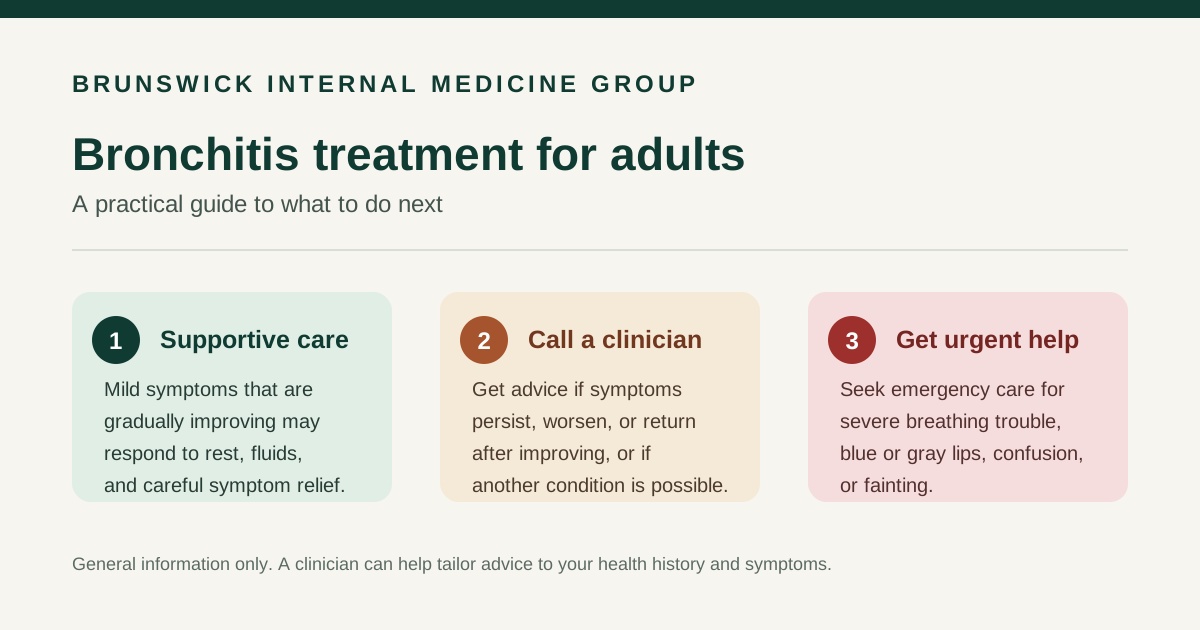
Bronchitis treatment for adults usually focuses on easing symptoms while the airways recover. Acute bronchitis often follows a respiratory infection, and a cough can linger after other symptoms improve. The right approach depends on how you feel, how long symptoms last, and whether another condition such as pneumonia or asthma could be involved. This practical guide explains how to choose supportive care, use symptom relief cautiously, and recognize when a clinician should evaluate the cough.
Contact the practice about a persistent cough
What is acute bronchitis?
Acute bronchitis is irritation and inflammation of the larger airways, often causing a cough with or without mucus. It commonly occurs during or after a viral respiratory illness. The cough may outlast fever, congestion, or sore throat. That can be frustrating, but a lingering cough does not by itself prove that an infection needs an antibiotic.
Symptoms can include cough, chest soreness when coughing, tiredness, mild shortness of breath, sore throat, and sometimes a low fever. Mucus may be clear, white, yellow, or green. Color alone cannot establish whether bacteria are causing the illness. A clinician considers the symptom pattern, medical history, examination, and whether testing is useful.
Bronchitis is not the same as pneumonia. Both can cause cough and breathing symptoms, but pneumonia may require different evaluation and treatment. Asthma, COPD, heart disease, a weakened immune system, pregnancy, older age, or other significant health concerns can also change the threshold for seeking advice. This article offers general information, not a diagnosis or a substitute for care tailored to you.
What is the best way to treat bronchitis in adults?
For many otherwise healthy adults with uncomplicated acute bronchitis, care is supportive: rest, fluids, and symptom relief suited to the individual. There is no single treatment that instantly stops the cough. The goal is to stay comfortable and safe while the illness improves, and to notice signs that point to another problem.
A practical starting point is to take stock of the whole situation. Ask yourself whether you can breathe comfortably at rest, whether you are drinking and urinating normally, whether fever is settling, and whether symptoms are moving gradually in the right direction. Mild symptoms that are improving may be manageable at home. New or worsening breathing trouble, severe weakness, or a return of fever after improvement calls for a different response.
- Rest and pace activity. Sleep when you can and return to ordinary tasks gradually. Do not push through marked breathlessness, dizziness, or fever. Short, easy activity around the home may be reasonable if it does not worsen symptoms.
- Drink fluids as tolerated. Water, soup, and other familiar drinks can help maintain hydration, especially if fever has reduced appetite or fluid intake. If a clinician has advised you to limit fluids because of a heart or kidney condition, follow that advice rather than increasing fluids automatically.
- Use humidified air if it feels soothing. A clean humidifier may ease throat irritation. Follow its instructions and clean it regularly. Avoid bowls of hot water or direct steam, which can cause burns.
- Try warm drinks or throat-soothing measures. They may make a scratchy throat or cough feel more manageable. Honey may soothe cough in adults, but avoid it if you have a reason to restrict it. Honey is not suitable for infants.
- Avoid smoke and airway irritants. Tobacco smoke, vaping aerosols, dust, and strong fumes can worsen irritation. Reduce exposure where practical while recovering.
Over-the-counter products may relieve a particular symptom, but they do not cure the underlying illness. Read active ingredients and warnings, and avoid taking multiple products with the same ingredient. If you are pregnant, have chronic conditions, take prescription medicines, or are unsure what is safe for you, ask a pharmacist or clinician first.
How can you make a home-care plan?
A small plan can make recovery easier to manage and can help you notice when the situation changes. Keep it simple: write down when symptoms began, what is bothering you most, what you are doing for relief, and what would prompt you to call. The purpose is not to monitor every cough. It is to make decisions based on the pattern instead of reacting to every temporary change.
- Choose one or two priorities. If the cough disrupts sleep, focus on safe comfort measures before bedtime. If fatigue is the main issue, reduce demanding tasks and schedule rest. If congestion or fever is more troublesome, address that symptom without adding unnecessary combination products.
- Set up the basics. Keep water, tissues, a thermometer if you have one, and any needed medicines in a convenient place. Check product labels before the first dose, not when you are tired and reaching for a second bottle.
- Track meaningful changes. Note fever, breathing, energy, sleep, fluid intake, and whether symptoms are improving or worsening. You do not need a complex chart; a few dated notes are enough to explain the course if you seek care.
- Decide your threshold for calling. If breathing becomes difficult, chest pain is severe, you cough blood, or you feel confused or faint, seek urgent help. For worsening or persistent symptoms without an emergency, contact a clinician for individualized advice.
For example, an adult with a cough after a cold who is breathing normally, drinking well, and gradually sleeping better may continue supportive care and watch the trend. An adult whose fever returns after several days of improvement, or who becomes short of breath walking across a room, should not assume this is simply the same uncomplicated cough. The change in direction matters.
Do adults need antibiotics for bronchitis?
Usually not for uncomplicated acute bronchitis. Many cases are viral, and antibiotics do not treat viruses. Unneeded antibiotics can cause side effects and contribute to antibiotic resistance. A clinician may consider antibiotics when evaluation suggests a bacterial infection or another diagnosis for which they are appropriate. Do not use leftover antibiotics or another person’s prescription.
Do not decide based only on mucus color or the intensity of a cough. Instead, consider the overall course: whether symptoms are worsening, whether fever persists, whether breathing is difficult, and whether you have conditions that raise your risk. When uncertain, ask for medical advice rather than starting medication on your own.
It can help to understand why an antibiotic may not be offered. A cough can sound harsh and still be caused by a virus. Antibiotics do not directly soothe airway irritation, and taking one when it is not indicated can bring unwanted effects without treating the cause. If a clinician recommends an antibiotic, ask what finding or suspected diagnosis supports that choice, how to take it, and what side effects or changes should prompt follow-up.
How can you choose symptom relief safely?
Start by identifying the symptom interfering most with sleep or daily activities. A dry, irritating cough may call for different measures than fever or aches. No over-the-counter product is necessary simply because a cough is present, and relief can be modest. Compare active ingredients with anything else you take, read the dose and warning information, and use only as directed.
Combination products can seem convenient, but they may include ingredients for symptoms you do not have. Taking a separate pain reliever alongside a multi-symptom product can accidentally duplicate an ingredient. Check the label rather than relying on the product name. If the instructions are unclear, a pharmacist can help you identify ingredients and possible interactions.
Some cough medicines may provide temporary relief for some adults, while others may not help much. Medicines that cause drowsiness can affect driving and other tasks. Do not take more than the label allows if relief is limited. Keep a short record of the product, active ingredient, amount, and time taken; this helps prevent accidental repeat doses and gives a clinician a clearer picture.
For fever or aches, some adults use nonprescription pain relievers, but they are not safe for everyone. Follow the label and ask for advice if you have liver or kidney disease, a history of stomach bleeding, take blood thinners, drink heavily, are pregnant, or have been told to avoid a particular medicine. Do not stop prescribed medicines because a cough began unless the prescriber advises you to do so.
When reviewing a product, consider three questions: Does it treat the symptom I actually have? Could it duplicate an ingredient in another product? Does a health condition or prescription make it unsuitable? If any answer is unclear, pause and ask a pharmacist or clinician. A complicated medicine cabinet is not a measure of good care; often, avoiding unnecessary products is the safer and simpler choice.
How long can bronchitis symptoms last?
Acute bronchitis symptoms often improve over time, but cough can persist for several weeks. The trajectory matters: gradual improvement differs from worsening breathing, a new fever after initial recovery, or a cough that continues without improvement. If the pattern concerns you, contact a clinician rather than assuming every lingering cough is normal.
A useful check-in is to compare today with several days ago. Is your energy returning? Is breathing comfortable at rest? Is fever settling? Are you sleeping a little better? A cough may remain after those signs improve. A new symptom or reversal changes the picture and may warrant medical advice.
While recovering, prioritize sleep and return to exercise gradually. If activity triggers unusual breathlessness, chest pain, dizziness, or a marked worsening of symptoms, stop and seek advice. Avoid smoking and reduce exposure to irritants where possible. Do not use exercise as a test of whether your lungs are healthy; if ordinary activity feels unusually difficult, that is useful information to share with a clinician.
For people who live with others, recovery also means balancing rest with everyday responsibilities. If possible, postpone strenuous chores and ask for help with tasks that leave you winded. Break necessary activity into shorter periods, take breaks, and stop if symptoms increase. A gradual return is more sensible than trying to make up for every missed task in one day.
When should you contact a clinician?
Seek prompt medical advice for trouble breathing, blue or gray lips, chest pain that is severe or not limited to coughing, confusion, fainting, coughing up blood, or a high or persistent fever. Call emergency services for severe breathing difficulty or another immediate emergency.
Arrange an evaluation if symptoms are getting worse rather than better, the cough is prolonged, you have repeated episodes, or you are concerned. A lower threshold for advice is sensible for older adults, people who are pregnant, and people with chronic lung or heart conditions or weakened immunity. Significant wheezing, shortness of breath, or signs of dehydration should not be managed with home care alone.
Think about urgency in layers. Severe breathing trouble, fainting, confusion, or blue-gray lips is an emergency. A cough that is worsening, a fever that persists, or a new symptom after a period of improvement merits prompt clinical guidance. Mild symptoms that are steadily improving may be monitored, provided no personal medical advice says otherwise. If you are unsure which category fits, calling for guidance is safer than waiting for certainty.
A clinician may ask when the cough began, how it changed, whether you have fever or breathing difficulty, and what medicines you take. Depending on the findings, they may consider whether testing or a different treatment is needed. Not every cough requires imaging or antibiotics; evaluation is guided by the individual situation.
What information should you prepare for an appointment?
A few details can make a cough visit more useful. Before contacting a medical office, note:
- When symptoms began and whether they are improving, stable, or worsening.
- Your highest measured temperature, if you checked it, and when you measured it.
- Whether you have shortness of breath, wheezing, chest pain, or blood in mucus.
- Relevant conditions, such as asthma, COPD, heart disease, or immune system problems.
- Prescription medicines, supplements, and over-the-counter products you have used.
- Recent respiratory exposures or illness in the household, if known.
- How the cough affects sleep, work, eating, drinking, and ordinary activity.
If possible, bring medication containers or a written list that includes the active ingredients. Include products you stopped because they did not help or caused an unwanted effect. This is more useful than trying to remember every name during a visit.
Bring specific questions. You might ask whether your symptoms suggest bronchitis or another condition, what symptom relief is appropriate with your medical history, what changes should prompt a call, and when to follow up if the cough continues. If a test or medication is suggested, ask what it is meant to clarify or treat and how the result changes the plan.
For ongoing general medical needs, review the practice’s primary care services. You can also learn how internal medicine and primary care relate, read a practical guide to asthma treatment, and find information about Dr. Kainth.
What happens during an evaluation?
A visit generally starts with the symptom history and a review of relevant health conditions and medicines. The clinician may check temperature, breathing, and other vital signs, and listen to the lungs. Whether additional tests are useful depends on what the history and examination show. The purpose is not simply to label a cough, but to identify warning signs or another illness that changes the plan.
Describe the cough in concrete terms: whether it is mostly dry or produces mucus, whether it interrupts sleep, and whether it comes in spells or is present throughout the day. Mention whether you become short of breath doing ordinary tasks, such as walking across a room or climbing a short flight of stairs. These details do not diagnose the cause on their own, but they help the clinician understand how the illness is affecting you.
It is reasonable to ask what the examination suggests and what would make testing useful. A clear explanation can help you understand why a clinician may recommend observation, symptom care, testing, or a different treatment. Ask what changes should prompt urgent attention, how long to wait before checking back if you do not improve, and how to reach the office with a question.
Before the visit ends, repeat the plan in your own words. Confirm the medicine name and instructions if one is recommended, whether it is safe with your other medicines, and what to do if it does not help. If the advice is to monitor symptoms at home, clarify what improvement should look like and when to follow up if it does not happen.
How can you reduce airway irritation and protect others?
When a cough begins with a respiratory infection, practical steps can reduce the chance of passing germs to others. Stay home when acutely ill if possible, cover coughs, wash hands, and consider a well-fitting mask around people at higher risk. Follow current public health advice and workplace policies. Ventilation and avoiding close contact while feverish may also help.
Do not smoke or vape while recovering. If someone in your home smokes, ask them to do so outdoors and away from doors and windows. Strong cleaning fumes and airborne dust can irritate airways, so reduce exposure where practical. If you need to clean, choose a less irritating approach and ventilate the room rather than mixing cleaning products.
When you cannot avoid being around other people, cough into a tissue or your elbow, dispose of tissues, and clean your hands afterward. Avoid sharing cups and utensils while acutely ill. If you live with someone at higher risk of complications, consider extra distance and better airflow while symptoms are active. These measures do not treat bronchitis, but can limit spread of respiratory germs and reduce avoidable irritation.
Could another condition be causing the cough?
A cough can come from several causes, including a viral infection, asthma, allergies, reflux, medication effects, or pneumonia. Symptoms overlap, so self-diagnosis can be unreliable. A cough that repeatedly returns, lasts longer than expected, or occurs with wheezing or breathlessness may need evaluation for a cause beyond acute bronchitis.
People with asthma may notice worsening wheeze or increased need for their prescribed reliever medicine. Follow the asthma action plan provided by your clinician, and seek urgent help if breathing is severe or your usual plan is not working. Do not borrow inhalers or change prescribed treatment without medical guidance.
Pattern and context can offer clues without proving a diagnosis. A cough that began with congestion and sore throat may follow a respiratory infection. Recurrent cough with wheeze may prompt a clinician to consider asthma. A cough that begins after a new medicine, follows exposure to an irritant, or accompanies heartburn may lead to different questions. Share the timing and circumstances rather than trying to settle the cause yourself.
Do not assume every chest cough is bronchitis, or that a familiar cough is harmless because it happened before. A clinician can weigh your history, examination, and risk factors. This is especially important when symptoms recur, when you have an underlying lung or heart condition, or when breathing changes from your usual baseline.
What should you do if symptoms return or linger?
If the cough improves and then worsens again, note what changed and when. A new fever, increased breathlessness, or a sudden decline in energy deserves attention rather than simply restarting the same home remedies. If symptoms fluctuate, a short log can help distinguish gradual recovery from a pattern that needs evaluation.
Repeated episodes are worth discussing. Record how often they occur, whether they follow particular exposures or seasons, and whether you have wheezing, reflux symptoms, or medication changes. The clinician may use that history to consider causes other than a single episode of acute bronchitis. Bring a list of products you tried and whether they helped, even if the effect was small.
When a cough lasts longer than expected, focus on the whole picture: direction of change, impact on sleep and activity, and any warning signs. Do not keep increasing medicine doses or combining products to force the cough to stop. If symptoms are persistent or concerning, ask for a review and a clear follow-up plan.
How can you compare common next steps?
The right next step depends less on the label “bronchitis” than on severity, direction of change, and personal risk. This comparison is a general guide, not a substitute for instructions from your own clinician.
| Situation | Reasonable next step | What to watch |
|---|---|---|
| Mild cough and cold symptoms, breathing comfortably, gradual improvement | Supportive care and observation at home | Whether fever settles, energy returns, and breathing remains comfortable |
| Persistent cough, uncertainty about medicines, or symptoms not improving as expected | Contact a clinician or pharmacist for tailored advice | Duration, medication use, chronic conditions, and changes in symptoms |
| Worsening breathing, recurrent fever, significant wheeze, or marked decline | Prompt medical evaluation | How quickly symptoms are changing and whether usual activity is affected |
| Severe breathing difficulty, confusion, fainting, blue-gray lips, severe chest pain, or blood in cough | Seek emergency help | Do not delay to try another home remedy |
This kind of decision guide is most useful when paired with a personal threshold. For instance, someone with asthma may need to seek advice earlier than a healthy adult with a steadily improving cough. If a clinician has given you an action plan for a chronic condition, follow that plan even when a general guide suggests observation.
What questions are commonly asked about bronchitis treatment for adults?
Can bronchitis go away without medicine?
Many cases of acute bronchitis improve with time and supportive care. Severe, worsening, prolonged, or concerning symptoms should be assessed, especially when an underlying condition raises risk.
Does yellow or green mucus mean I need an antibiotic?
No. Mucus color alone cannot determine whether an antibiotic is needed. The decision depends on clinical assessment and the likely cause of illness.
Can I exercise while I have bronchitis?
Rest while you have fever or feel significantly unwell. Return to activity gradually as symptoms improve. Stop if unusual shortness of breath, chest pain, dizziness, or marked fatigue develops, and seek advice when appropriate.
When is a cough an emergency?
Severe breathing difficulty, blue or gray lips, confusion, fainting, or severe chest pain requires urgent help. Coughing up blood or a rapidly worsening condition also needs prompt medical evaluation.
Should I keep taking cough medicine if it is not helping?
Do not exceed label directions or increase the dose because relief is limited. Check ingredients and ask a pharmacist or clinician whether the product is appropriate, especially if you take other medicines or have a chronic condition. Persistent symptoms may need evaluation rather than another product.
How can you turn the advice into a practical plan?
For a mild, steadily improving illness, begin with rest, fluids as appropriate, and simple comfort measures. Use medicine only when it fits the symptom and is safe for you. Keep track of the trend rather than expecting every symptom to disappear at once, and avoid using mucus color alone to decide whether treatment is needed.
If the cough is persistent, worsening, difficult to manage, or accompanied by concerning symptoms, ask a clinician to help determine the cause and appropriate care. A useful conversation should leave you knowing what to do at home, which changes require urgent attention, and when to check back if you do not improve.
For a cough that concerns you, use the direction of symptoms and your health history to guide the next step rather than relying on mucus color or a single home remedy.