
Health resources
How to Monitor Blood Pressure at Home
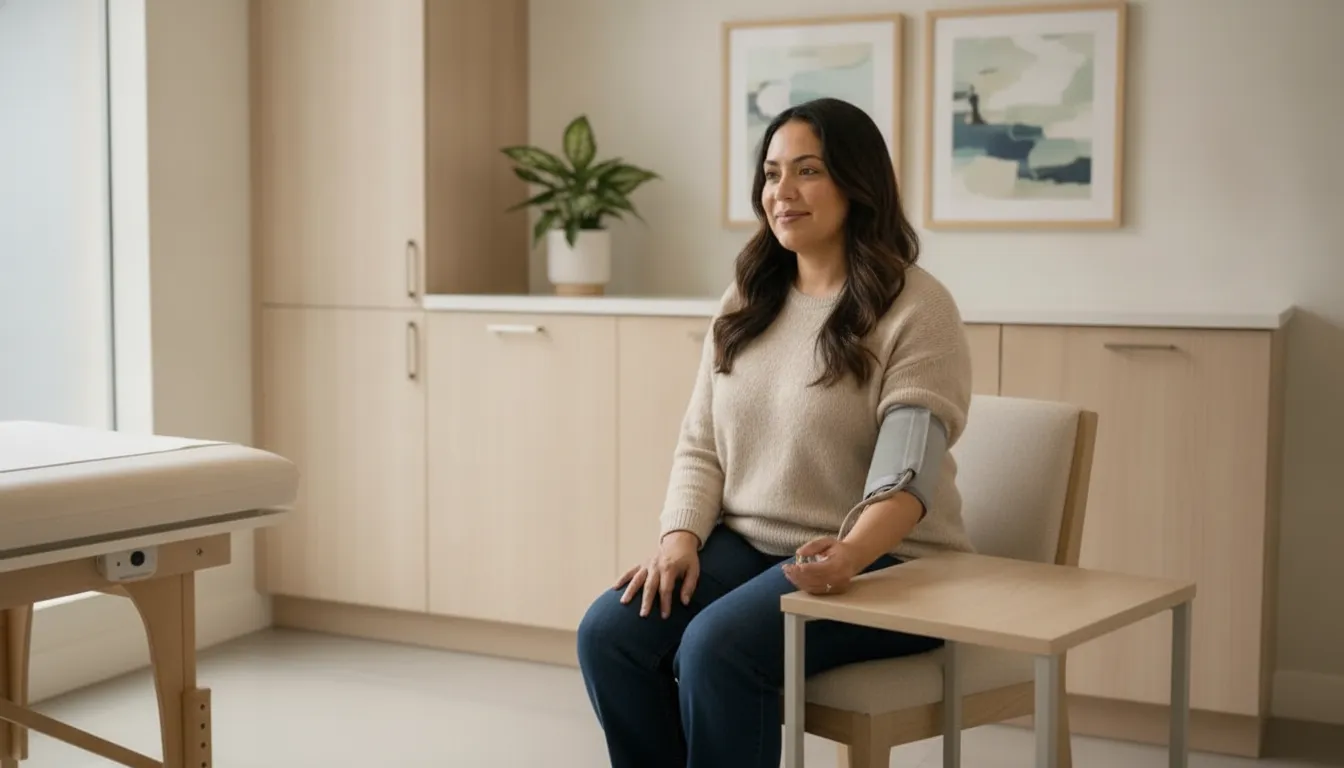
Learning how to monitor blood pressure at home starts with a steady routine, not a pile of extra checks. Use a validated automatic upper-arm cuff, sit quietly, take two readings, and write both numbers down. One home reading is a clue for your clinician. It is not a diagnosis, and it does not replace regular medical care.
Call (732) 940-7777 to review home blood pressure readings
A clear log is most useful when a clinician can look at it with you. If a pattern worries you, or you are not sure your cuff fits, Brunswick Internal Medicine Group's primary care team can review the numbers with your history and medicines.
Choose a monitor that can give a fair reading
For most adults, an automatic cuff that wraps the upper arm is the better choice. Wrist and finger monitors are easier to misuse, and a small change in position can throw the number off. The CDC's guide to measuring blood pressure describes home monitoring, with support from your care team, as one way to track readings outside the office. Choose a validated upper-arm cuff that matches your arm.
Measure around the middle of your bare upper arm before you buy. A cuff that is too small can read high. A cuff that is too large can read low. If the box lists a size range, pick the one that includes your measurement. Ask a pharmacist or clinician if you are between sizes.
After you buy the monitor, bring it to an appointment. A clinician can watch your technique, check the cuff, and compare a home reading with the office device. Plan to bring it back about once a year, or sooner if the company says the device needs a check. Follow the manual for batteries, cleaning, and storage.
Prepare the same way each time
Small habits change a reading. The goal is the same setting each time, so your log shows a pattern instead of a reaction to coffee, stairs, or a full bladder.
Before you measure:
- Skip caffeine, exercise, and smoking for at least 30 minutes.
- Empty your bladder.
- Roll clothing off the arm. Do not put the cuff over a sleeve.
- Sit quietly for at least five minutes. Do not talk, text, or watch something tense.
If you are in pain, sick, or unusually stressed, still take the planned reading, then note that context. A number taken during a headache means something different from a number taken on a calm morning. Do not add a stack of extra checks just because one result looks odd, unless your clinician told you to.
Sit so the cuff is at heart level
Sit in a chair with your back supported. Put both feet flat on the floor and keep your legs uncrossed. Rest the arm on a table so the cuff sits about level with your heart. If the arm hangs down, the reading can look higher than it is.
Place the cuff on bare skin. The lower edge should sit just above the bend of the elbow, and the tubing should follow the device picture. Keep your hand open and relaxed. Do not make a fist. Stay still and silent while the cuff inflates and releases. Talking or shifting in the chair can spoil the result.
Either arm can work for many adults. If your clinician names one arm, use that arm every time and write it in the log. If the two arms often differ by a lot, mention that at your next visit instead of guessing which number to keep.
Take two readings and save both
Unless you were given another plan, take two readings about one minute apart. The CDC's measurement page says to take at least two readings, one or two minutes apart, and to measure at the same time of day. Record both results. Do not keep only the lower number, and do not average them in your head and throw the originals away.
Use this order each time:
- Sit quietly for five minutes with the cuff in place.
- Take the first reading without talking.
- Wait about one minute. Stay seated.
- Take the second reading.
- Write both numbers, the time, and the arm you used.
A device memory or a phone app can help, but a paper note is fine if you can bring it to the visit. Keep the original pair of numbers. A label such as "high" is much less useful than the actual readings.
Build a log your clinician can use
There is no one schedule for every adult. Someone checking a new pattern may be asked to measure morning and evening for several days. Someone whose treatment just changed may have a shorter or longer plan. Follow the plan you were given. If you were not given one, a steady time each day is more useful than random checks all afternoon.
A useful log includes the date, the time, both numbers from each check, the arm, and a short note if something was unusual. Examples include poor sleep, a recent walk, pain, or a missed meal. Also jot questions about side effects so you remember them later. Do not start, stop, or change a blood pressure medicine because of the log alone.
| What to record. | Why it helps. |
|---|---|
| Date and time. | Shows whether morning and evening patterns differ. |
| Both readings. | Keeps the pair instead of a single picked number. |
| Arm used. | Makes later readings easier to compare. |
| Symptoms or context. | Explains pain, illness, stress, or a recent activity. |
| Medicine questions. | Gives you a list to raise at the visit. |
If you miss a planned check, mark it missed and continue. Do not take several extra readings to make up for it. A gap is easier to interpret than a burst of anxious repeats.
Keep the routine steady from day to day
The point of home checks is a pattern your clinician can trust. Pick one chair, one table, and one arm, then use that setup again. Morning readings, taken before breakfast and before medicine if that is your plan, often differ from evening readings. That difference is useful only when the setup stays the same.
Write the plan where you will see it, whether that is a note on the fridge or a phone reminder. If you share the log with a partner, agree on who writes the numbers so a reading is not saved twice or skipped. Store the cuff in the same place so you are not hunting for it when you are rushed.
Travel, a late shift, or a weekend does not have to break the log. If you cannot sit quietly for five minutes, skip that check and mark the reason. A missing row with a reason is more useful than a reading taken in a car or while you are standing in a kitchen.
Review the log about once a week, not after every pair of numbers. Circle readings that came with pain, illness, or a clear mistake such as a slipped cuff, and leave the rest for your clinician. Trying to diagnose yourself from only a few days of numbers usually creates more worry than clarity.
Fix the mistakes that skew home readings
Many surprising numbers come from technique rather than a sudden change in health. A cuff over a sleeve, crossed legs, a dangling arm, a full bladder, or a reading right after climbing stairs can shift the result. Caffeine, nicotine, pain, and worry can do the same. The practical fix is to reset the conditions, refit the cuff, and take the planned pair of readings.
A pharmacy or gym machine is not a substitute for a cuff that fits you. Those machines can be a rough check, but they do not replace a validated home monitor and a log. If home numbers and office numbers disagree, bring the monitor in. The difference may be the device, the fit, the setting, or a real pattern such as higher readings only at the clinic.
Do not compare your log with a family member's target or an online chart and decide you have the same plan. Your clinician reads the numbers next to your age, medicines, and other conditions. The log is there to make that talk clearer.
How to monitor blood pressure at home when a reading looks high.
If one reading looks higher than usual, sit still and check that the cuff has not slipped. Repeat the measurement after at least one minute, then write both numbers down. That pair of readings is not, by itself, a reason to change a dose.
Some readings and symptoms need care the same day. Chest pain, trouble breathing, fainting, sudden weakness, trouble speaking, or vision changes are emergencies: call 911. A reading that stays at 180/120 mm Hg or higher also needs prompt clinical advice, even before the next routine visit. Pregnancy and the weeks after birth need their own plan from the obstetric clinician, not a general home rule.
For the fuller warning-sign guide, read when to see a doctor for high blood pressure. This article stays on how to take and record the reading. That article covers which symptoms and repeated high readings should change your next step.
Bring the monitor to primary care
Home monitoring works best with a clinician who can see the pattern. Bring the log, the monitor, your medicine list, and your questions. Ask whether the cuff size is right, which arm to use, how often to check, and what kinds of readings should prompt a call.
People who already have high blood pressure, who just started or changed treatment, or whose home and office numbers do not match are common reasons to set up a plan. So is simple uncertainty about the device. Primary care at Brunswick is the visit where those questions belong, alongside the rest of your health.
At that visit, ask what repeat checks at home should look like for you. Some adults need only a few days of readings before the next appointment. Others are asked to measure for longer when a medicine dose is new. Confirm whether to check before pills, after meals, or at a set clock time. Also ask which reading should trigger a call, and which pattern can wait.
Bring the cuff even if the log is already on your phone. A clinician may have you take one reading in the room so you can compare technique, not just the digits. If the home device and the office device are far apart on the same arm, that is a device question. It is not a reason to buy a second monitor on your own the same day.
You can review primary care booking before you come, or look through Brunswick's services if you also need help with related concerns such as cholesterol or kidney health. The cholesterol screening guide and the chronic kidney disease overview explain how those visits use labs, not a home cuff.
When you are ready to review the log in person, start with Brunswick primary care and bring the cuff with you.
Call (732) 940-7777 to schedule a primary care visit
Frequently asked questions
How often should I check my blood pressure at home?
Use the schedule your clinician gave you. If you do not have one yet, checking at a steady time once or twice a day for several days is more useful than checking all day. Do not add extra readings after every worrisome number unless you were told to.
Which arm should I use?
Either arm is fine for many adults, but use the same arm each time. If your clinician has compared both arms and named one, use that arm. Write the arm in the log so later readings match.
What if the first reading is much higher than the second?
Stay seated, wait about one minute, and keep the second reading along with the first. A first reading is often higher if you just sat down or were talking. Do not delete it.
Can I stop my medicine if home readings look good?
No. Do not stop or change a prescribed blood pressure medicine because home readings look better. Bring the log to your clinician and ask before you change anything.
When should I call instead of waiting for the next visit?
Call 911 for severe symptoms such as chest pain, trouble breathing, fainting, sudden weakness, trouble speaking, or vision changes. Contact a clinician promptly if a repeat reading stays at 180/120 mm Hg or higher, or if you are pregnant or recently gave birth and a reading is high. For other patterns, use your log at a planned visit.